Training with Peggy
My training challenge
It’s been just over a year since we welcomed new puppy Peggy into our family. I thought it was time for an update on where we are and where we need to go.
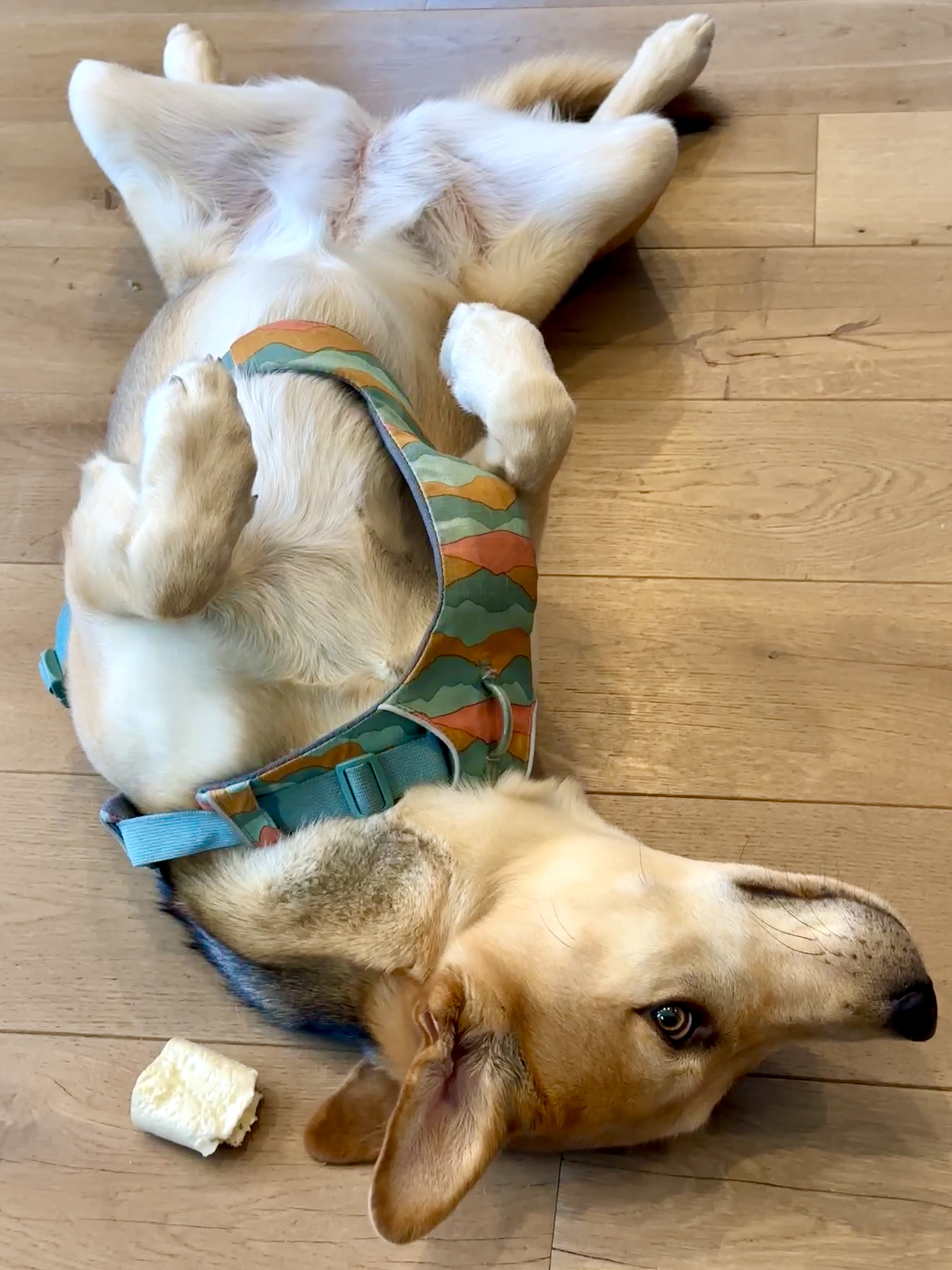 As anyone with a puppy or young dog knows, it’s not done when the housetraining is complete! Raising a dog is many years of building and maintaining a solid relationship, establishing a good communication system, making a plan as temperaments and traits reveal themselves, then working on skills that are important for your dog’s quality of life and your family’s quality of life.
We adopted Peggy because I assessed her to be the most challenging puppy in the litter, and I started to wonder where she might end up unless someone with experience and behaviour education adopted her. I suppose I’m pleased my assessment appears to be accurate, but it started a very challenging chapter in our pet-owning lives!
When Peggy was about 4-5 months, I decided that some of her behaviour wasn’t entirely normal. All the things she was doing were normal for an “about to be” adolescent dog but the intensity and duration of them and the recovery from them wasn’t normal.
Adolescent dogs jump up on everyone, mouth everything and everyone, object to being restrained or handled, bark at everything, and get super excited. Peggy’s behaviour was all of these but overly-intense with long duration and a lack of emotional regulation – she could not calm down on her own. Perhaps most concerning, she simply couldn’t rest. The slightest sound or nearby movement would have her awake and alert (and barking).
I decided to hire a board-certified veterinary behaviourist to assess Peggy. During the consultation, the veterinary behaviourist agreed with me. She confirmed that Peggy’s behaviour was extreme, and not normal. It was too intense, would appear out of context, and was repetitive - at times compulsive. She was diagnosed with “Hypersensitivity-Hyperactivity Syndrome”. She also diagnosed her with “Hyposomnia” – she wasn’t getting nearly enough rest, especially during the day. Medication was strongly recommended to help her get her emotions and overly active brain under control. The prognosis was very favourable as she was still so young and growing – both body and brain. And so began the next phase of our journey with Peggy!
The great things about Peggy:
- She’s always happy! Everything is fun, every human is wonderful, and every dog is her new best friend. I’ve never seen her appear to be sad or mad.
- She’s keen to do something anytime and particularly loves training sessions.
- She’s incredibly clever and learns things fast. This can be both fun and also a curse!
- She loves to use her nose and excels in scentwork. Even at the height of over-excitement she can switch to doing scentwork in an instant – it’s quite remarkable.
- She’s surprisingly non-destructive in the house (although she doesn’t have complete freedom yet).
Challenges:
- She guards things from humans, and it can be difficult to persuade her to trade what she has for something else. She also appears to think about these transactions and learn from them – they may not be so easy next time!
- She has the loudest bark I’ve ever experienced and it’s her go-to behaviour when she’s frustrated, hungry or over-tired.
- She’s difficult to feed. She eats a normal amount of food each day, but it’s nearly impossible to maintain a set feeding schedule. She gets her medication in her breakfast and it’s best if it’s at a consistent time, but this is proving to be difficult – breakfast is sometimes dinner.
- She hates being restrained or even touched unless she wants to be so grooming, putting equipment on and off and preparing for vet visits is an ongoing training process.
- She uses her mouth to object to things.
- She gets over-the-top excited about many things, so her socialization to the world has been very slow.
The improvements on her medication after 9 months:
- She rests more easily now, even with activity around her.
- Her constant barking has diminished considerably during a normal day.
- She is far less mouthy, and she bites far less and far softer when she’s frustrated.
- She seeks out physical affection and seems to enjoy being touched when she asks (as long as we don’t try to cuddle/restrain or get too excited with our touch).
- She still has trouble calming down, but she can do it.
The next stage of this journey? Now I need to figure out what’s normal adolescent behaviour we can work on and improve, and what still needs some tweaking with medication and behaviour support.
Stay tuned for our next steps training with Peggy. I might bring in some big guns to help us out!